A lot of games use procedurally generated content to keep players constantly engaged. In roguelike games everytime the player start a new run, the whole level is randomly generated using a procedural generation algorithms. What this means is that the map layout along with any other components of the level such as enemies and resources are randomly scattered and repositioned each time. Even though the level generation is random there are certain key aspects of each level that are kept consistent with every iteration, such as the art direction and the level design specific to that level are always maintained across each iteration.
For example, lets take 'Dead Cells', one of the best Roguelites to have ever been made, here the 'Toxic Sewers' level has a lot of verticality, wherein there player can move vertically across the level to different heights signifying the depth of the sewers. Whereas the 'Ramparts' level has only the walls as the traversable path with a few inner wall sections that extend downward from the top of the Ramparts. The Stilt Village is flat with very little verticality and no below ground sections. So, in essence regardless of how random the procedural generation is there are always restrictions to how the level with be constructed based on the thematic level design and art direction. This ensures the even though the levels are randomly built there is some sort of consistency in them and this allows players to approach the levels with some degree of preparedness.
 |
| Toxic Sewers |
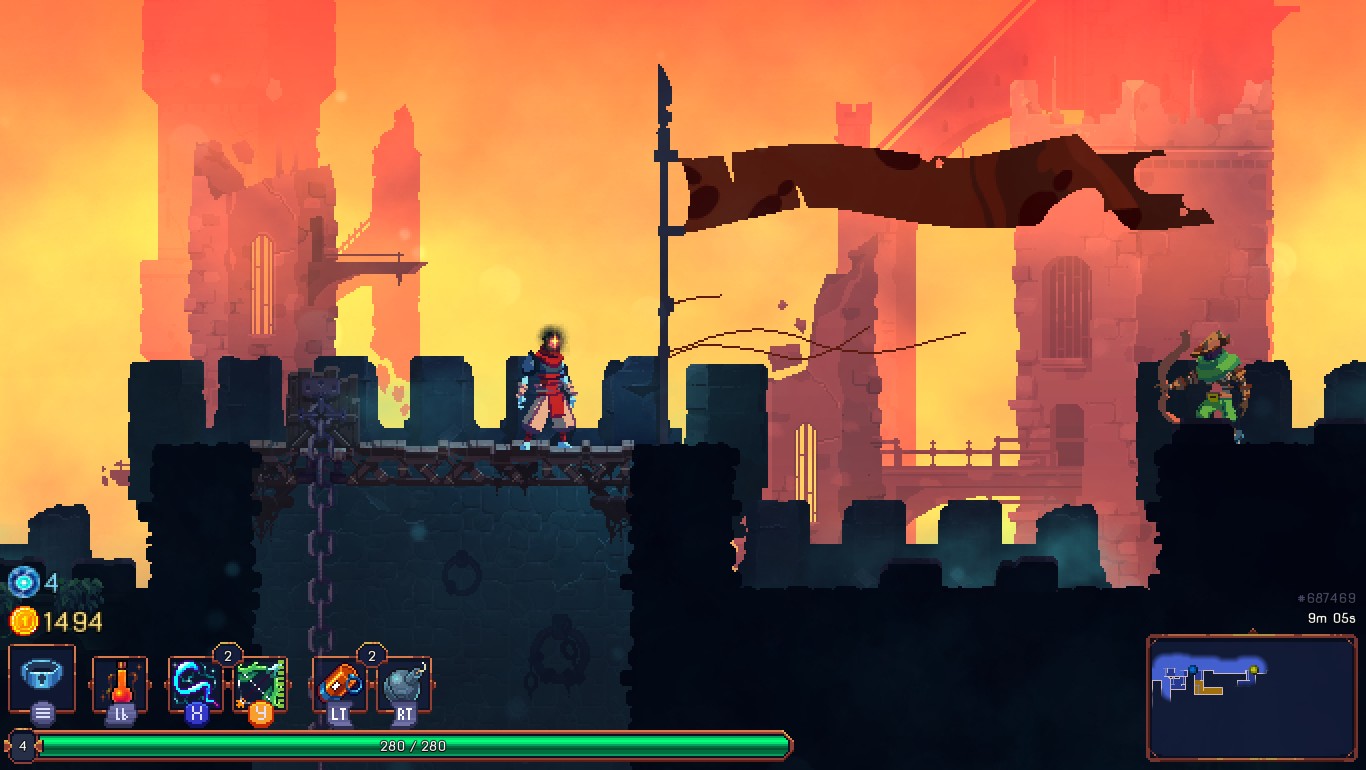 |
| Ramparts |
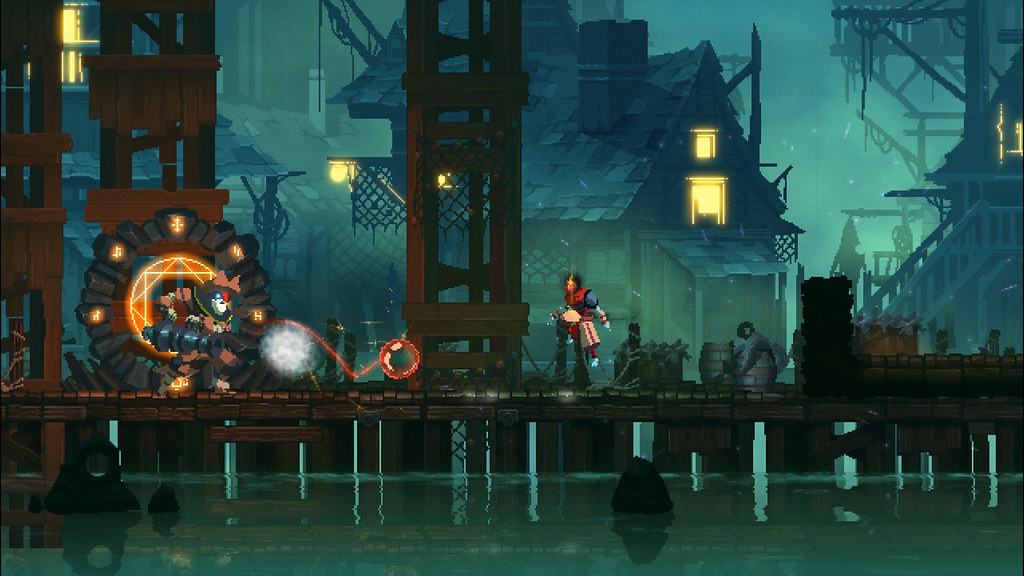 |
| Stilt Village |